An architect came to find me after a session, holding a question through the whole coffee break.
“What exactly is a high value scenario,” he said. It was not really a question. The phrase is on every slide in the industry this year, and he had finally cornered someone who would have to answer for it. “In TOGAF, a scenario is a story I tell once, at design time, to harvest requirements. A problem, its actors, its environment. I tell it, I extract what the architecture must achieve, and I retire it. Your people use the same word for fault management. A thing with a weight and a score. A thing you come back to every year.”
“And it gets worse below it,” he said. “Your documents say process. They say capability. They say task. I have TOGAF, eTOM, ITIL, ODA. In every one of them those words mean something settled. The way you autonomy people use them, they fit nowhere.”
He was right that they fit nowhere. He had the reason backwards.
Architecture is supposed to hold still.He could feel something he had not named. Architecture does not move.
That is its virtue, and it is engineered. A process model is built to outlive three reorganizations and a change of CEO. A capability is true whether a clerk delivers it or a model does. The frameworks he trusts are deliberately stripped of time and circumstance: they say what exists and how the parts fit, and they keep saying it after the technology underneath has been replaced twice. They are the building.
The closed loop he was being shown would not hold still. It changed shape between one slide and the next. He read that as a young discipline that had not tidied its terms. The terms are fine. The thing moves for a reason, and the reason is the whole argument.
The task is an X-ray, not a step.Take the smallest of his words first, the task, because that is the one another industry already solved.
When the car industry had to measure how autonomous a car was, it did not measure the car’s architecture. It did not score the assembly line, the dealership, or the service bay. It chose one persona, the driver, and watched what he does between an origin and a destination. The steering. The braking. The watching. The deciding. SAE gathered that bundle under one phrase, the dynamic driving task, and asked the only question that mattered: how much of it has the machine taken. Zero to five.
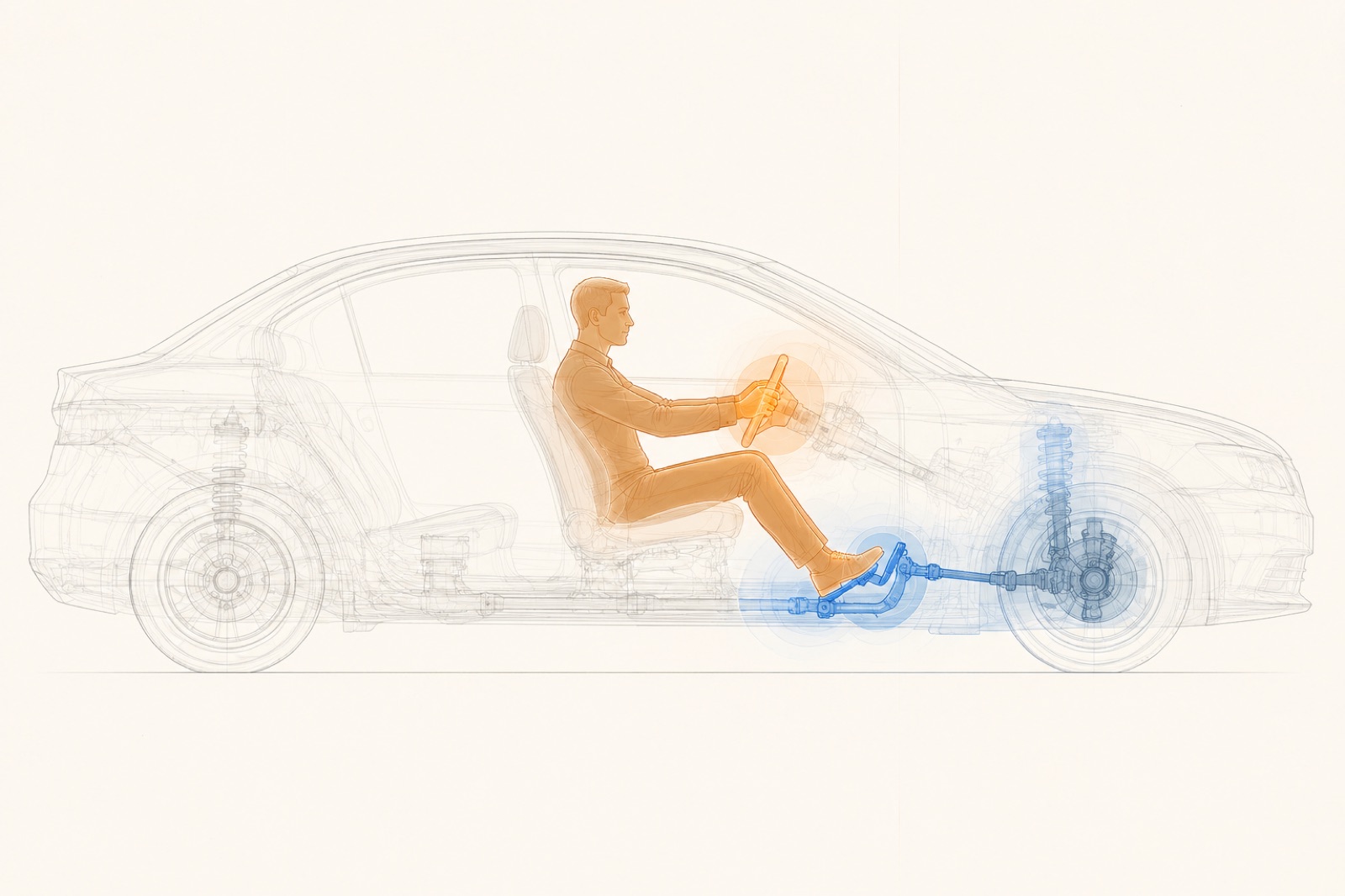
The standard is openly indifferent to how the car works inside. Rules or neural networks, it makes no difference. It is not describing the driving process. It is an X-ray of the driving process: an image that throws away the flesh, keeps only the parts that can be handed to a machine, and counts how many have been.
That is the unit my architect could not place. A task, in autonomy, is not a step inside a process. It is the delegable slice of the work, the line you read to see who is still doing the job. His frameworks describe the body. The autonomy people walked in holding an X-ray of the same body, and called the shadows on it by the same names. That is where the trouble began.
Networks made the same move. The closed loop itself is old: sense, decide, act, remember, go again. Aviation ran it, the military ran it, computing ran it. Networks added the one thing the older loops left implicit, intent, the declaration of what you want before the loop turns. Then they picked a set of operations worth delegating and read each one for how much of that loop the machine now runs. It is SAE, for networks.
The replacement test.There is a one-question test for telling the two apart, and you can run it on any slide in any meeting.
Take the artifact on the screen and ask: if every human in this operation were replaced by a machine tonight, would this document change?
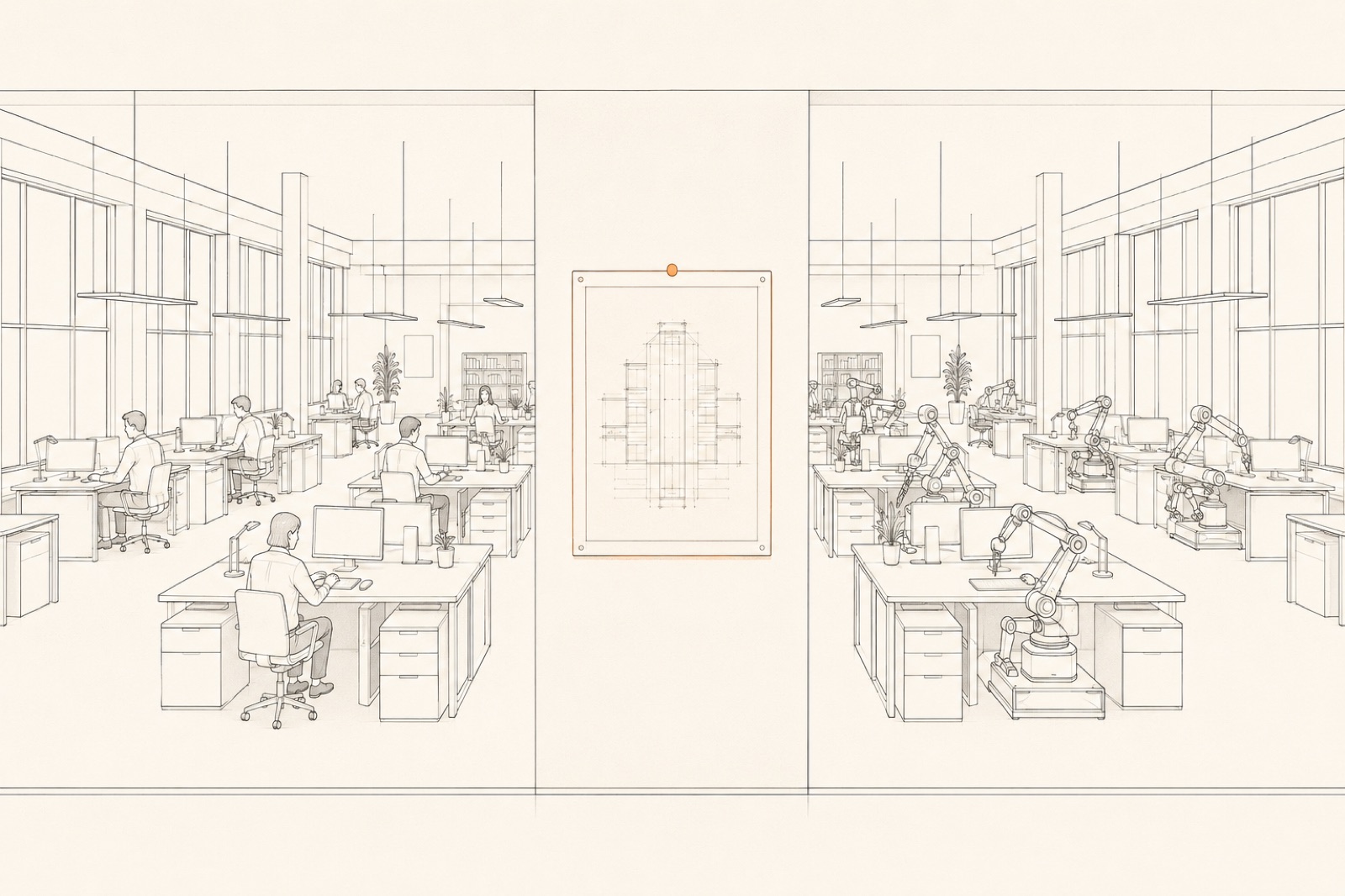
Run it on the process map. Hand the entire operation to machines tonight, and eTOM does not move one box. Fault management keeps the same steps whether a person walks them or a model does. The capability map does not move one line; the enterprise still manages resource problems, just with different hands. That stillness is not an accident. Architecture is built to be indifferent to who does the work, and the indifference is exactly what lets it survive every technology wave.
Now run it on the autonomy map. Every cell changes. Every score jumps to the top of the scale. The map records one thing only: who does the work, human or machine, task by task, loop by loop.
Architecture is blind to delegation by design. Autonomy is made of nothing else. They cannot be the same discipline, and no quantity of shared vocabulary will make them one.
The sharp objection arrives on schedule: but processes get redesigned as autonomy rises, architectures are rebuilt to receive it, people are reskilled. All true. None of it touches the test. The swap itself changes nothing on the page; the redesign that follows is a choice, and look at what it deletes. The ticket dies, the handoff queue dies, the approval checkpoint dies: every step that existed only to coordinate humans around the work, and never was the work. Fault management survives; its scaffolding does not. The architecture grows new structures, loops and intent interfaces, so it can receive the delegation, and the diagram still cannot tell you the level: two operators can run identical architectures, one with the loop deciding, the other with the same loop in advisory mode because nobody trusts it yet. The level lives in the delegation, and the delegation lives on the map. And the reskilling is the map moving: people stepping out of the loop’s tasks and up to its intent. The objection, walked to its end, is the proof.
Run the test in your next steering committee and watch the room. Almost nobody has asked it out loud. The reason is the cupboard.
We reached into the wrong cupboard.The people who built the autonomy instruments needed names, and they reached into the architect’s cupboard. They took architecture, and reference, and solution, and solution package, and capability, and value stream, and process, and scenario, and task. Every word was already occupied. Every word already had a canonical meaning an architect had spent a career learning to respect.
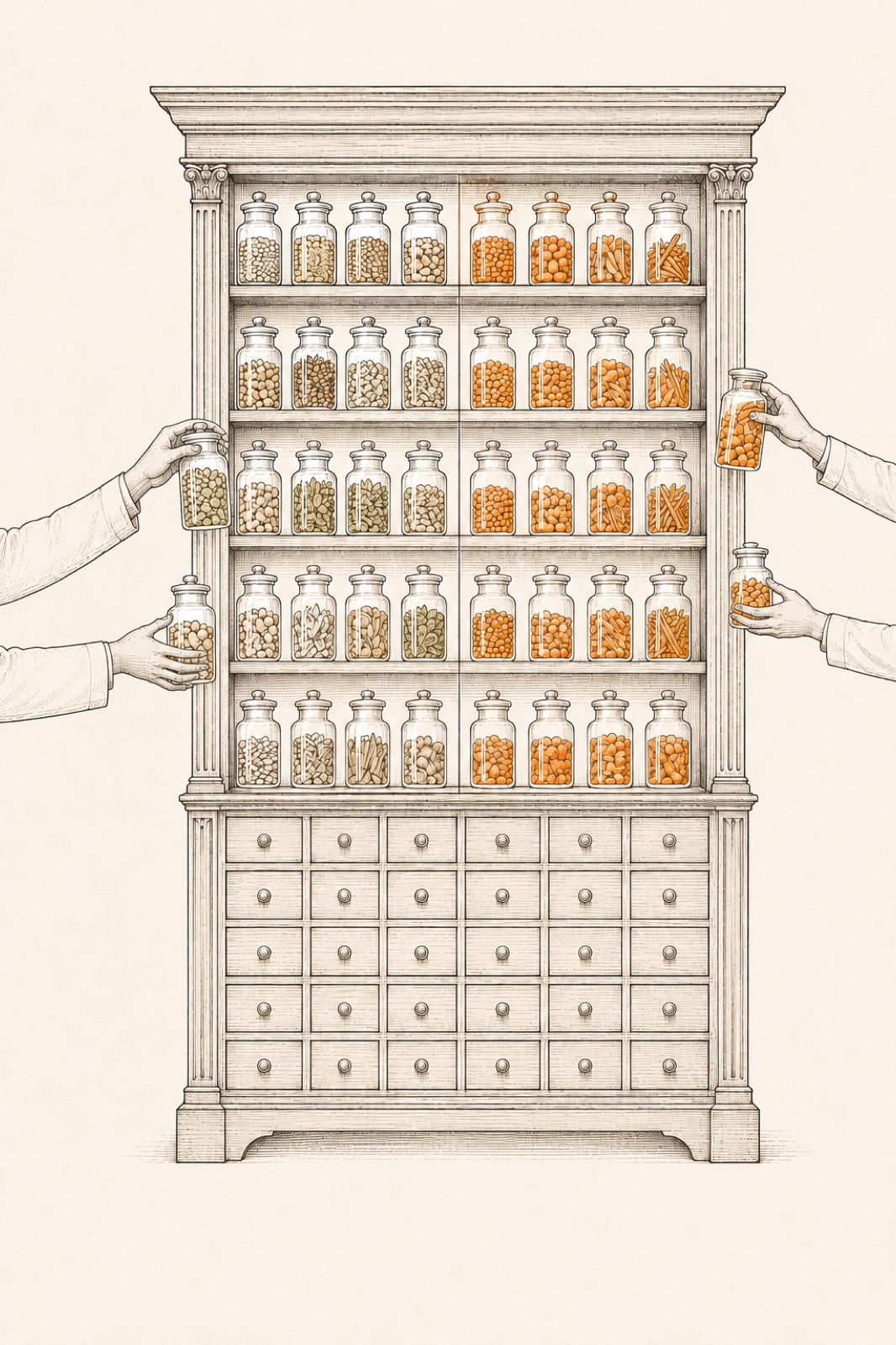
So the architect hears “capability,” reaches for his definition, finds it does not match, and concludes the autonomy crowd is sloppy. The autonomy specialist hears “capability,” means something temporal and runtime, and concludes the architect cannot see past his diagrams. Both are correct inside their own dictionary. Neither is reading the other’s.
The worst of them he had already named at the door. Scenario: in his world, scaffolding for the blueprint, a story told once and taken down; in ours, a district on the map, fault management for the wireless network, the assurance of one service, a slice of the operation you return to year after year to read how far the scores have moved. A standing appointment with the X-ray machine. Committees have spent months negotiating the governance of “scenarios” without ever noticing the two sides were not discussing the same object.
It is medicine used off-label. The right drug, the wrong label on the bottle. The pills work. The confusion is printed on the side.
Compliance, not derivation.There is a precise way to hold the two together, and it is neither of the moves people reach for.
The autonomy map sits on the architecture without being made of it. It points at the same structure, agrees with every part of it, invents nothing. What it adds is the one reading the architecture never set out to take: how much of the running has been handed to the machine. Fold the map into the architecture as a tidy branch, and you delete the only thing it carries, the delegation, and you are left holding the architecture again with extra steps. Treat the two as rivals, and you lose the traceability that makes the autonomy work believable at all.
The building, and the X-ray of who is still standing in it. You do not ask the X-ray to hold up the roof. You do not rebuild the roof from the X-ray. And an X-ray with no body behind it is just film. The map obeys the architecture. It is not carved out of it.
The objection also arrives from the opposite direction, and it is the smartest one. The autonomy world publishes blueprints around its loops, and inside them sit named processes, sequenced components, API calls in order: the build’s own vocabulary. Surely the two worlds have already merged? Look at the boundary. Systems are built at system scope. Fault management is one system, and the components, processes, and interfaces that realize it are built once and cross every scenario that touches them. The autonomy blueprint is scenario-bounded by design, one district of the map at a time, which places it on the observation side of the line: the elements named inside it are the elements the loop touches, traced so the builders know where the X-ray pointed. It speaks the build’s vocabulary the way a radiology report names the bones. Nobody mistakes the report for the skeleton.
None of this retires the architect. Designing a system that can receive delegation, the loops, the interfaces, the agents, is architecture, as real and as canonical as any. The car people would say the same: the standard that grades the driving never designed the car. Scoring how much has been delegated is the other instrument.
In Issue #6 I split the operation into three layers and gave each its own delegation journey. This is the floor beneath that one: the delegation read is a different instrument from the structure it reads.
Autonomy is a property of the operating model.The practical question follows: if the map does not build anything, who takes a company to Level 4?
The same people who always ran the cycle. Vision and strategy set the ambition: which operations, what level, by when. That is a strategy decision, and it belongs in the strategy document, next to market share. Organization design and architecture build what can receive the delegation: the closed loops, the platforms, the intent interfaces. Architects design those structures. Engineers build them. Operations redesigns its processes around them. Inside the operating model, the people and process legs adapt while the technology leg carries more of the load; the autonomy level is simply the honest measure of how far that shift has gone. And culture decides the ceiling, because a loop nobody trusts runs in advisory mode forever, and the last yard to Level 4 is crossed in the heads of the people who finally stop checking.
The map touches this cycle at exactly two points, and they are the handshakes everyone keeps asking for. Downward: the X-ray shows the builders where the gap is, which tasks are still human, which stage of the loop is missing. Upward: the architecture tells the map what exists to read. Gap down, trace up. Everything else in the cycle keeps its owner.
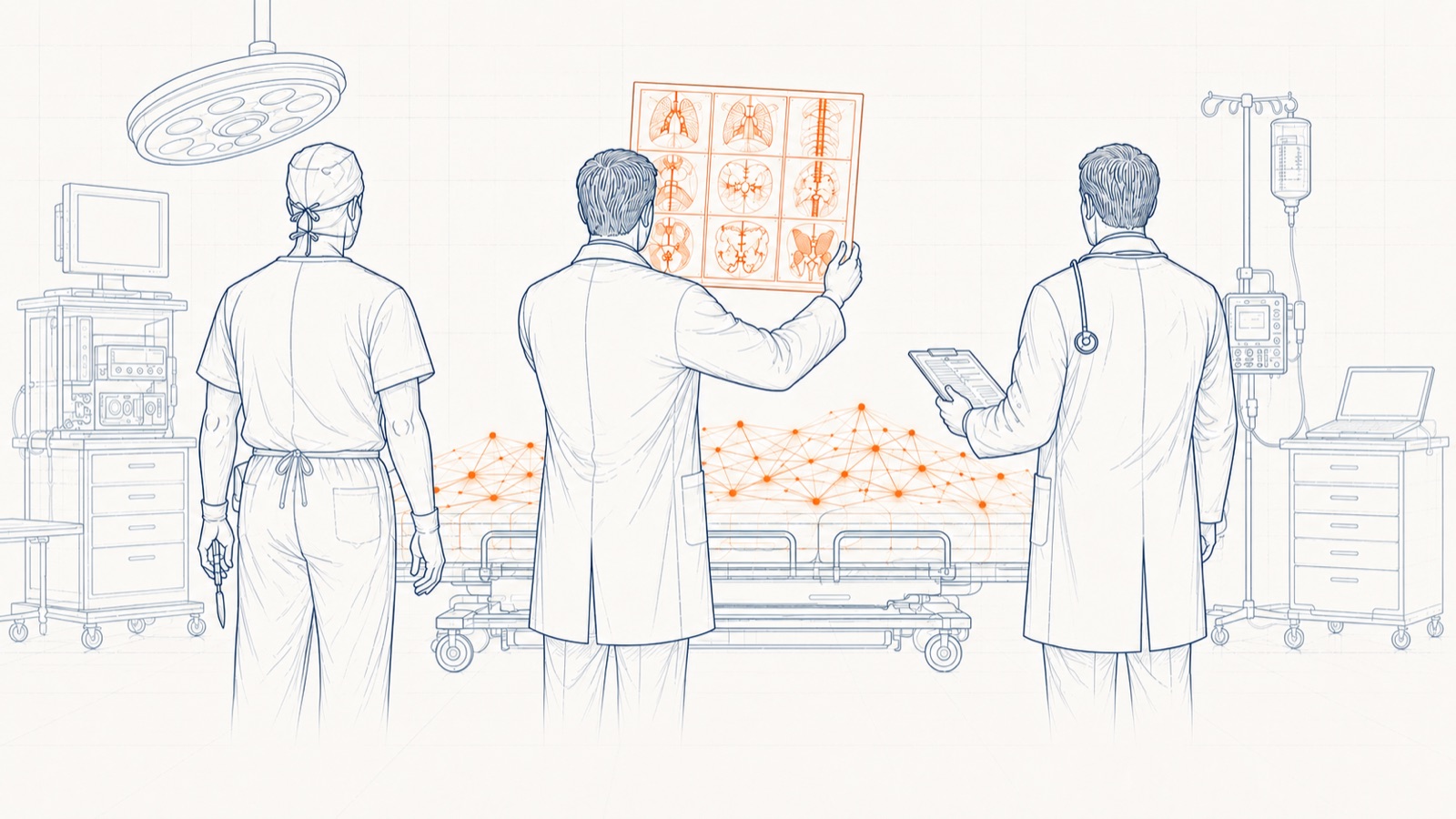
Who owns it, then? Medicine answered this the day the X-ray machine arrived. It did not hand the images to the surgeons, and it did not demote the readers to technicians. It grew a new specialty, and radiologists are doctors in full standing. The surgeon designs and repairs the structure. The radiologist reads what is actually happening inside it. And neither owns the patient: the treating physician does.
In our operation, the treating physician is operations. The architect keeps the surgeon’s chair, consulted at every gap, custodian of none of the scores. The autonomy specialist reads the films, a specialty born of the instrument the way radiology was born of the machine. And the patient on the table belongs to the people who run the network, sponsored from the top because the delegation crosses every layer. Stand up an autonomy program with its own leader if you need the momentum, and build it as scaffolding. The program comes down when the operating model has absorbed the property. The instrument stays.
The customer never sees any of it. She just gets her service back before she noticed it was gone.
What it costs you on Monday.A CIO is told autonomy is “architecture,” so he hands it to his architects, because architecture is what architects own. Now a senior architect, whose craft rests on stability and foundation, is given an instrument that holds still for nothing and asked to govern it like a building. He is reading Portuguese and being told to certify it as Spanish. He knows almost every word. He follows almost none of the meaning. He is not failing; he was handed the wrong document.
Across the room, some autonomy specialists, flattered by the borrowed vocabulary, start calling themselves architects. The architects who hold the canonical line recognize neither them nor their artifacts. The result is a discipline the real architects will not claim and the autonomy people are not entitled to.
The governance version is the most expensive. A stable artifact and a moving instrument change at different speeds. The architecture is approved slowly and left alone; the autonomy map moves because the thing it measures, the migration of work from people to machines, is itself moving. Push the moving instrument through the stable one’s approval gate and you do not govern it. You stall it. You send a validated body of work to the back of a queue built for blank pages.
We have watched this film. In 2016 the phrase was digital transformation, and we stretched it until it covered the call center and the coffee machine and meant nothing, and the budgets followed the fog. In 2026 the word is autonomous, on the same path, with one elegant complication: this time it is dressed in architecture’s clothes, which makes it look more rigorous than the last buzzword, and therefore harder to question.
The architect had one more question, the one underneath all the others. Then when is my work of value? Am I irrelevant in the age of autonomy?
The opposite. A workforce analyst studies how much a manager delegates to her team. The org chart, the roles, the reporting lines, somebody else designed those, and the analyst never asks for the chart to be redrawn in delegation scores. The manager can hand everything to her team tomorrow and the chart does not move one box. The analyst’s reading changes completely. Two readings of the same organization, and neither needs the other’s language. Your work does not come before mine or after it. It holds the shape I read against.
Architecture holds the shape of the building. Autonomy reads how much of the running you have handed to the machine. One was built to stand still. The other was built to move. Most of the fighting in our field right now is the sound of someone insisting they are the same thing.
Run the test. Then take your chair. The patient needs all three.